
Description
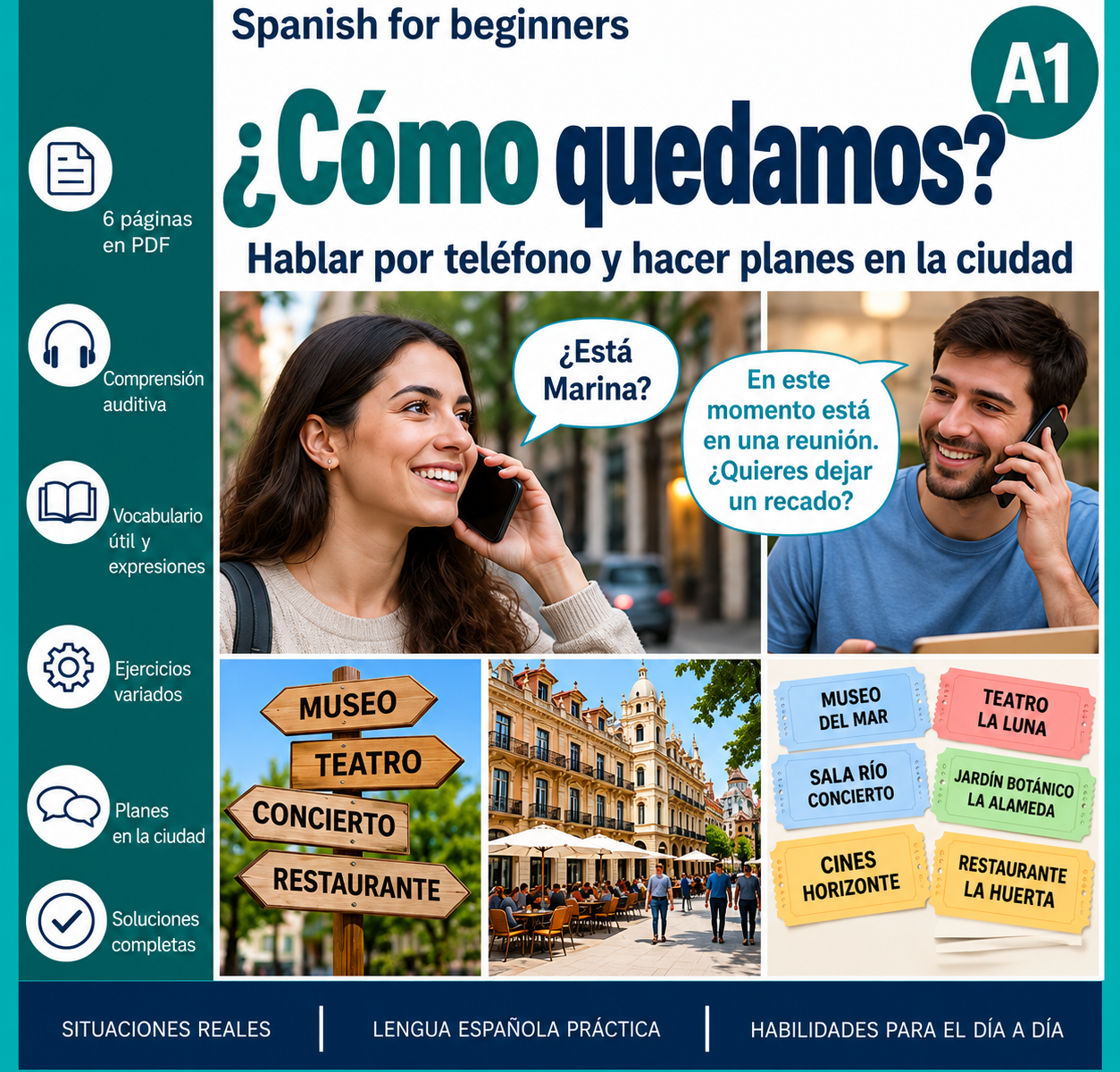
Develop practical Spanish communication skills with this illustrated six-page A1 lesson focusing on telephone conversations, arranging meetings, making invitations and organising leisure activities.
¿Cómo quedamos? introduces useful everyday expressions through realistic telephone dialogues, listening comprehension, pronunciation exercises, short advertisements, text messages and guided speaking activities.
Designed for beginners, the lesson helps students build confidence when speaking on the telephone, asking for someone, leaving messages, suggesting activities and agreeing on meeting times.
What the lesson includes
1. Telephone conversations and essential expressions
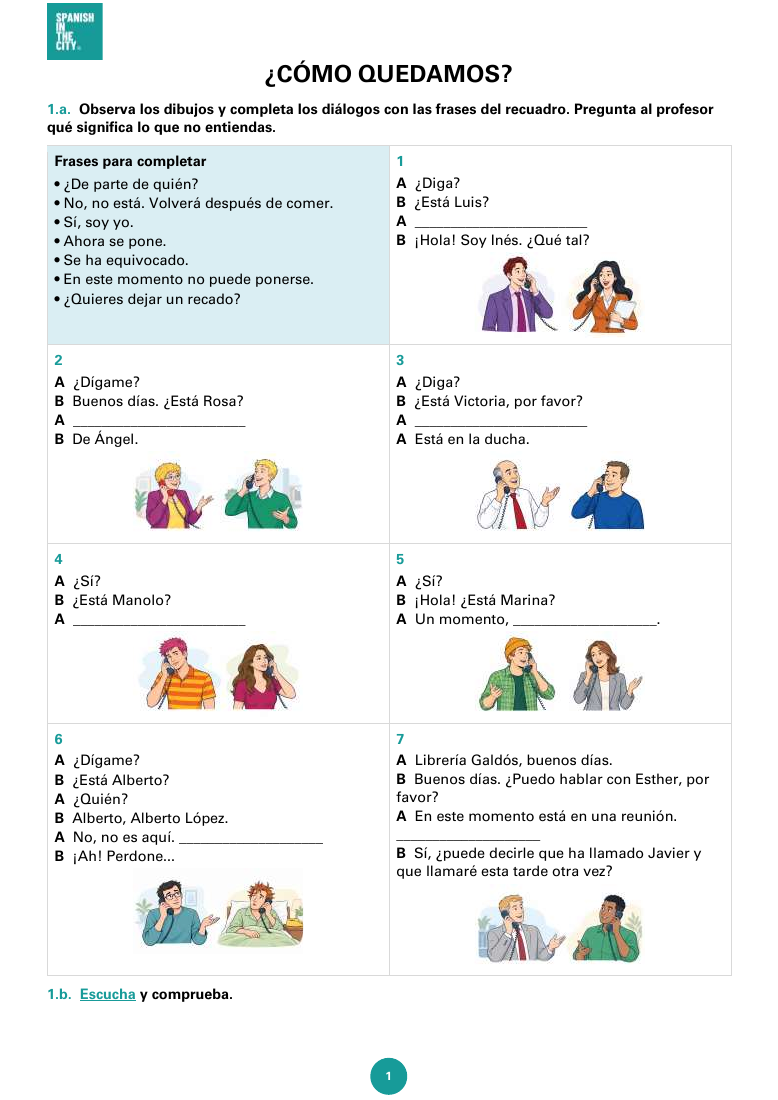
Seven illustrated dialogues introduce common telephone expressions such as ¿Diga?, ¿De parte de quién?, Sí, soy yo, Ahora se pone, Se ha equivocado and ¿Quieres dejar un recado?
Students complete the dialogues using appropriate expressions before checking their answers through a listening activity.
2. Pronunciation and intonation
Listening and repetition activities help students practise the rhythm and intonation of common telephone questions and responses.
3. Practical telephone situations
Eight guided situations provide opportunities to practise answering calls, asking for someone, explaining that a person is unavailable and offering to take a message.
4. Listening comprehension
Seven short audio situations introduce different telephone outcomes, including an engaged line, an unanswered call, a wrong number and someone being unavailable.
Students identify what happens in each recording using a structured comprehension table.
5. Reading comprehension: Plans in the city
Seven fictional advertisements introduce cultural and leisure activities, including exhibitions, theatre performances, concerts, cinema screenings, restaurants and guided visits.
Students practise understanding dates, opening hours, prices, addresses and other practical information through true or false statements and comprehension questions.
6. Making invitations and arranging meetings
Guided speaking activities introduce expressions such as ¿Nos vemos mañana?, ¿Qué podemos hacer?, ¿Cómo quedamos?, No me va bien tan pronto and ¿Qué te parece a las seis?
Students practise inviting someone, accepting or declining invitations, suggesting alternatives and agreeing on meeting times.
7. Invitations by text message
An illustrated activity featuring six smartphone messages helps learners recognise invitations and appropriate replies, reinforcing everyday written communication.
8. Complete answers and transcripts
The final page includes answer keys and transcripts for the telephone dialogues, listening comprehension and meeting-arrangement activity.
| Resource details | |
|---|---|
| Level | A1 |
| Format | Downloadable PDF |
| Length | 6 pages |
| Topic | Telephone conversations, invitations and making plans |
| Skills | Listening, pronunciation, vocabulary, reading and speaking |
| Includes | Illustrated dialogues, smartphone messages, answers and transcripts |
Internet access and external links
The PDF contains clickable links to accompanying audio recordings. Internet access is required to complete the listening and pronunciation activities. The listening transcripts are included in the resource.