
Description
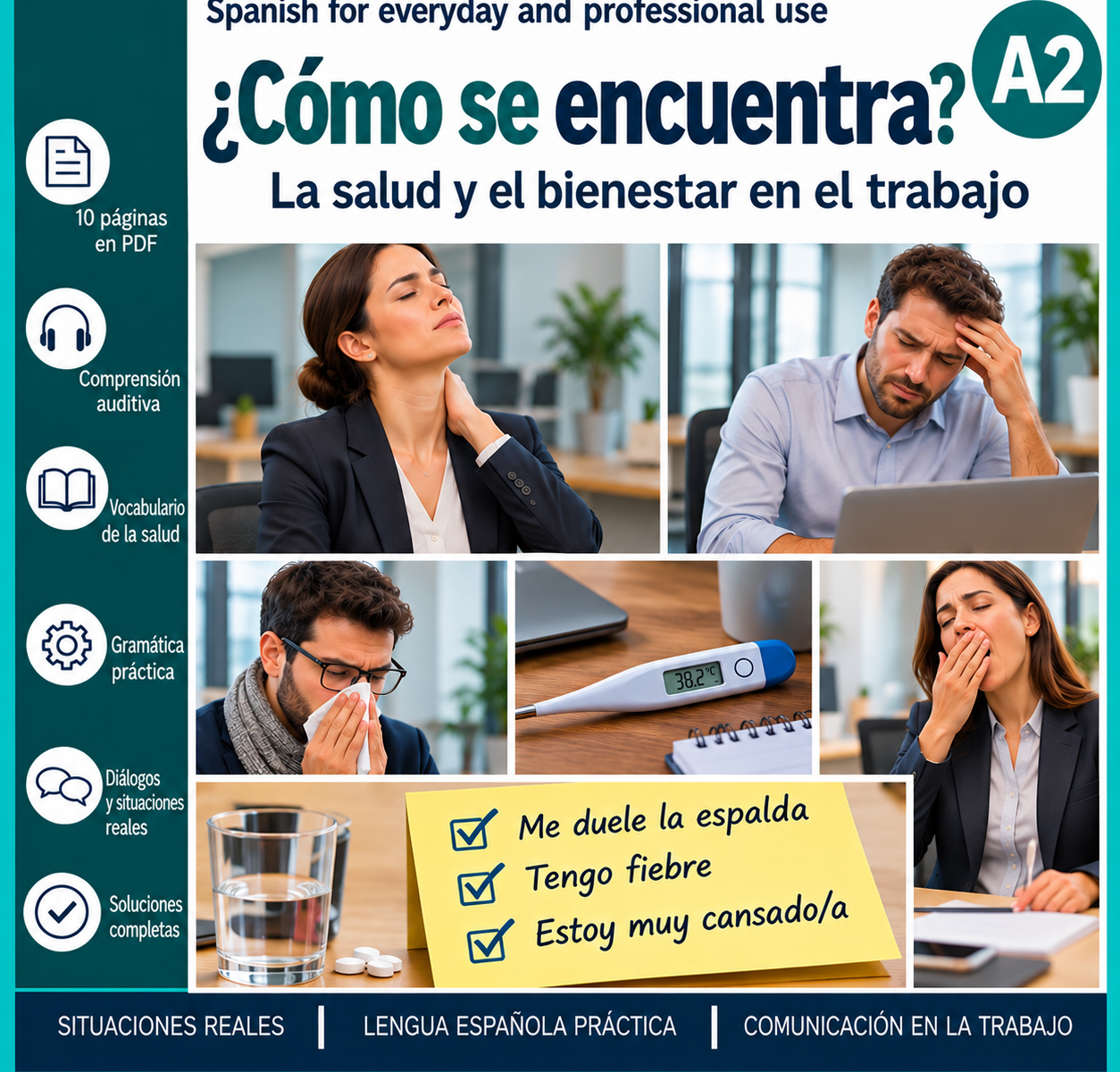
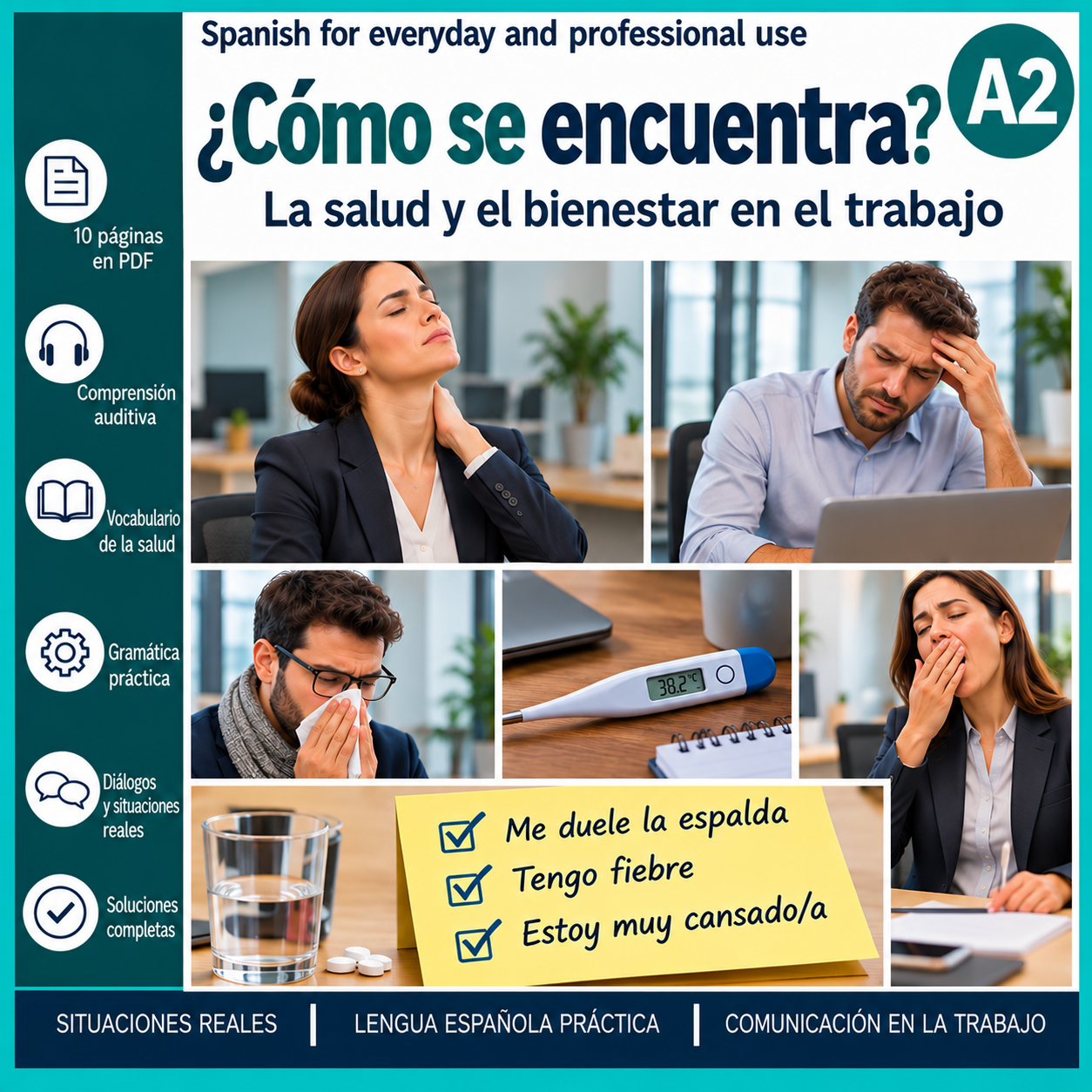
¿Cómo se encuentra? is an illustrated, 10-page Spanish lesson designed for beginner and elementary learners (A2), particularly lawyers, business professionals and adults who need to communicate about health and wellbeing in everyday professional situations.
Through illustrated vocabulary activities, reading comprehension, workplace conversations, listening exercises and guided speaking tasks, students learn to describe physical discomfort, explain how they feel, request assistance and rearrange professional commitments.
What does the lesson include?
1. Parts of the body
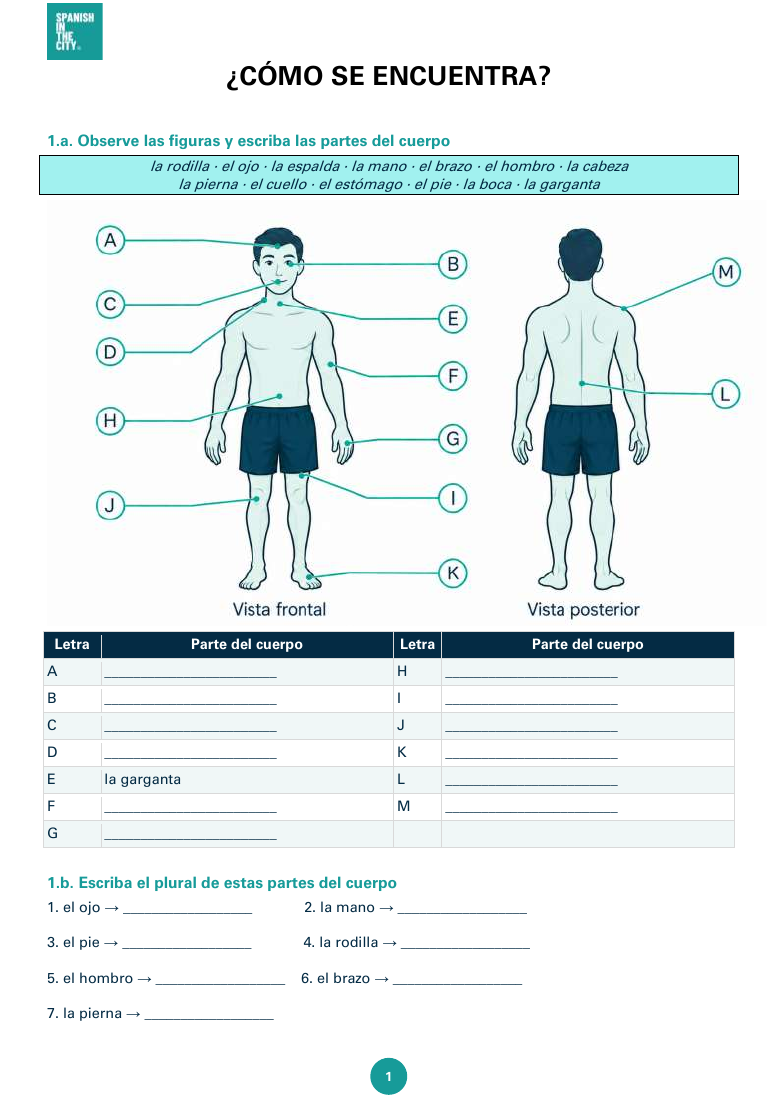
An illustrated anatomical vocabulary activity introduces 13 essential body parts, including la cabeza, el cuello, la garganta, la espalda, el hombro, el brazo, la rodilla and el pie.
Students identify body parts and practise forming their plurals.
2. Describing symptoms and discomfort
Students learn expressions such as:
- Me duele la cabeza.
- Me duelen los ojos.
- Tengo fiebre.
- Estoy cansada.
- No me encuentro bien.
Illustrated activities help learners connect symptoms with realistic situations.
3. Reading comprehension in professional contexts
Four short texts describe lawyers, consultants and financial professionals experiencing health problems while preparing presentations, attending meetings, working in an office or travelling for business.
Activities include true or false questions, identifying information and constructing complete sentences.
4. Comic-based dialogues
A four-panel illustrated story follows a lawyer who feels unwell, contacts reception, rearranges a meeting and attends a medical appointment.
Students complete the dialogues and practise them using guided role play.
5. Grammar: Doler, estar, tener and sentirse
Students practise:
- Duele and duelen with singular and plural body parts
- Indirect object pronouns: me, te, le, nos, os, les
- Estar with adjectives and tener with nouns
- The present tense of sentirse
- Muy, mucho and mucha
- Expressing when symptoms began with desde and desde hace
6. Professional communication and scheduling
A reading activity presents a lawyer who needs to change her working schedule because she is unwell.
Students practise understanding appointment times, rearranging meetings, informing colleagues and explaining why a professional commitment cannot go ahead.
7. Listening comprehension
Four short professional messages introduce symptoms, time expressions and requests for assistance.
Students identify the speakers’ problems, how long they have experienced them and the changes they need to make to their schedules.
8. Speaking and writing
Guided activities include a consultation role play, offering assistance, making suggestions to colleagues and writing a short message to the office explaining a health problem and requesting a change of meeting.
9. Grammar appendix
A dedicated grammar appendix explains eight essential topics, with examples and tables to support independent revision.
10. Additional exercises and answers
Eight supplementary exercise sets reinforce the grammar and vocabulary, including verb forms, pronouns, formal questions, time expressions and error correction.
The final page includes complete answers and the transcripts of the four listening messages.
Resource details
- Level: A2
- Format: Downloadable PDF
- Length: 10 pages
- Audience: Adult Spanish learners, lawyers and business professionals
- Skills: Vocabulary, reading, listening, grammar, speaking and writing
- Includes: Illustrated activities, professional dialogues, grammar appendix, additional exercises, answers and listening transcripts
Audio and internet requirements: Separate audio recording is included in the PDF, and internet access is required.
This resource is intended exclusively for Spanish language learning and does not provide medical, legal or professional advice.