
Description
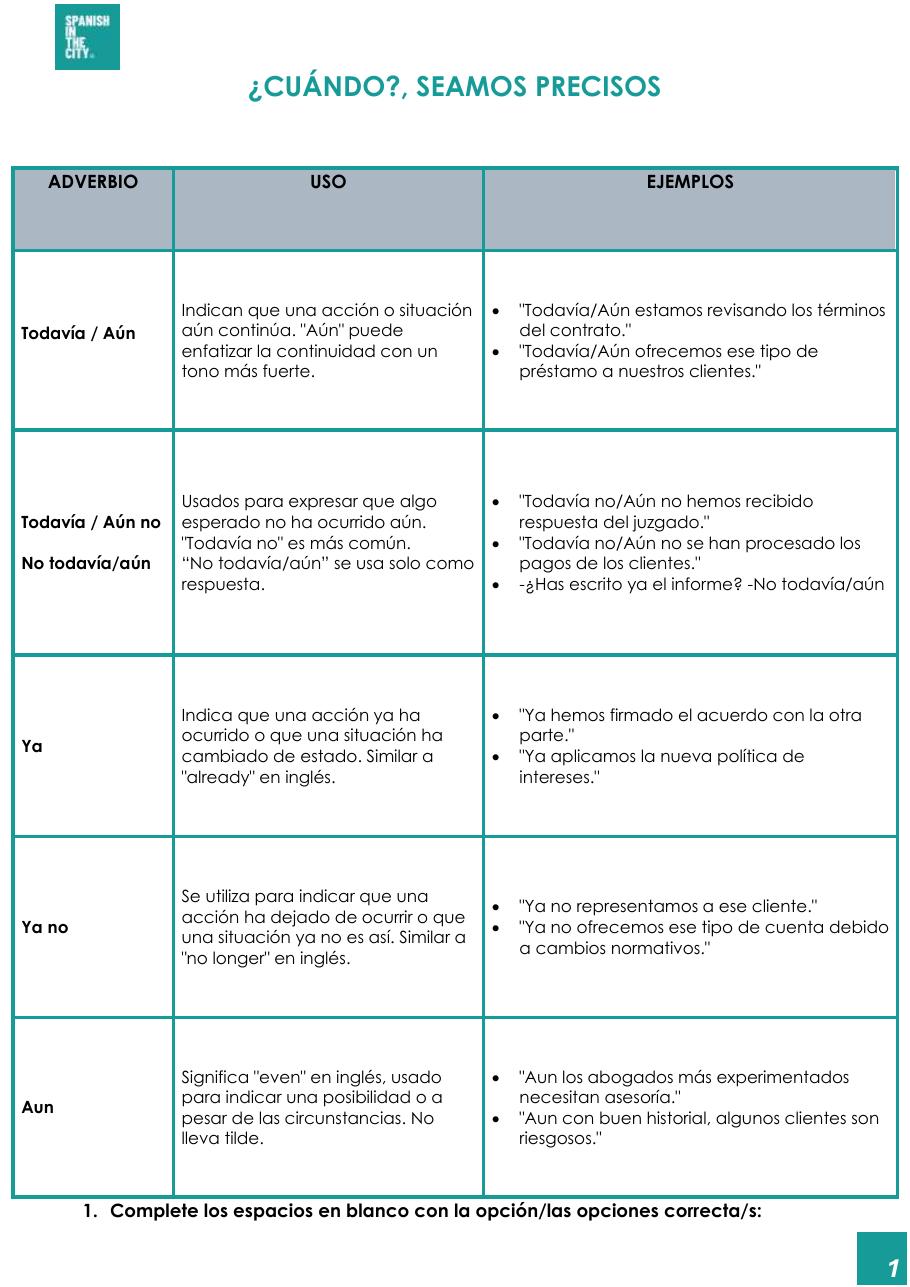
A 5 page B1 Spanish lesson designed to help students distinguish and use some of the most easily confused Spanish adverbs of time and continuity: todavía, aún, todavía no, aún no, ya, ya no and aun without an accent.
The lesson begins with a clear reference table explaining the differences between these forms and showing their use through examples drawn from legal, financial and professional Spanish. Students see, for example, how todavía and aún express continuity, how todavía no and aún no indicate that an expected event has not happened, and how ya and ya no express a change of state. The lesson also distinguishes aún from aun.
Students then complete ten contextualised multiple choice questions involving contracts, payments, clients, privacy policies, investment, regulation and negotiations. This gives them controlled practice choosing the appropriate adverb according to meaning and context.
A substantial reading comprehension activity develops these structures further through a fictional newspaper article about the merger of two energy companies. Students encounter the target language naturally in a longer text before completing nine verdadero o falso comprehension questions.
The final activity provides additional practice through short professional news texts and asks students to select the appropriate adverbs in context. The examples introduce language connected with competition, energy, employment and court decisions while keeping the focus firmly on Spanish language development.
Complete answers are included for all three activities.
This is a Spanish language learning resource. The legal, business and financial subject matter provides professional contexts in which to practise Spanish and is not intended as legal, financial or professional advice.