
Description
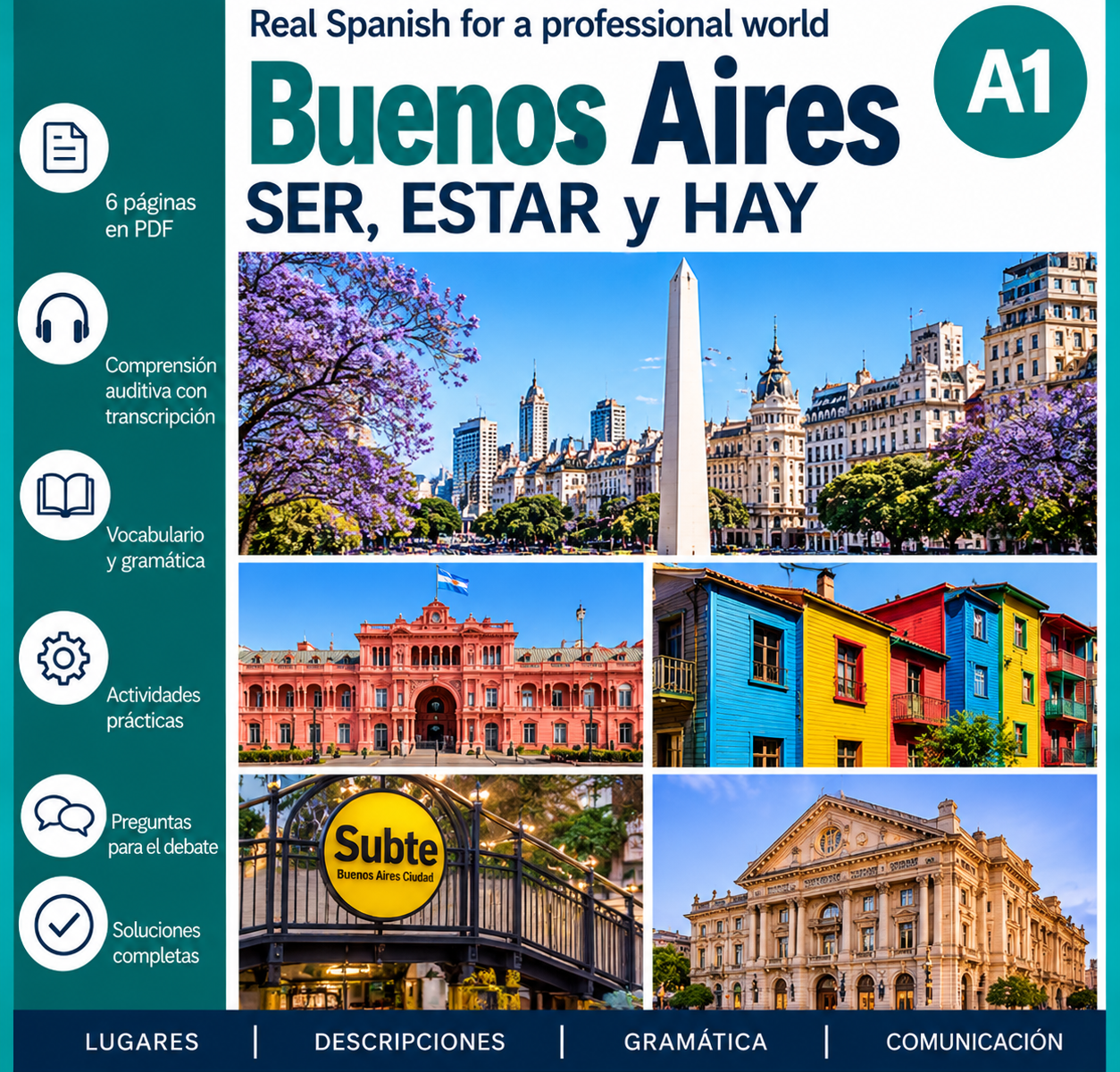
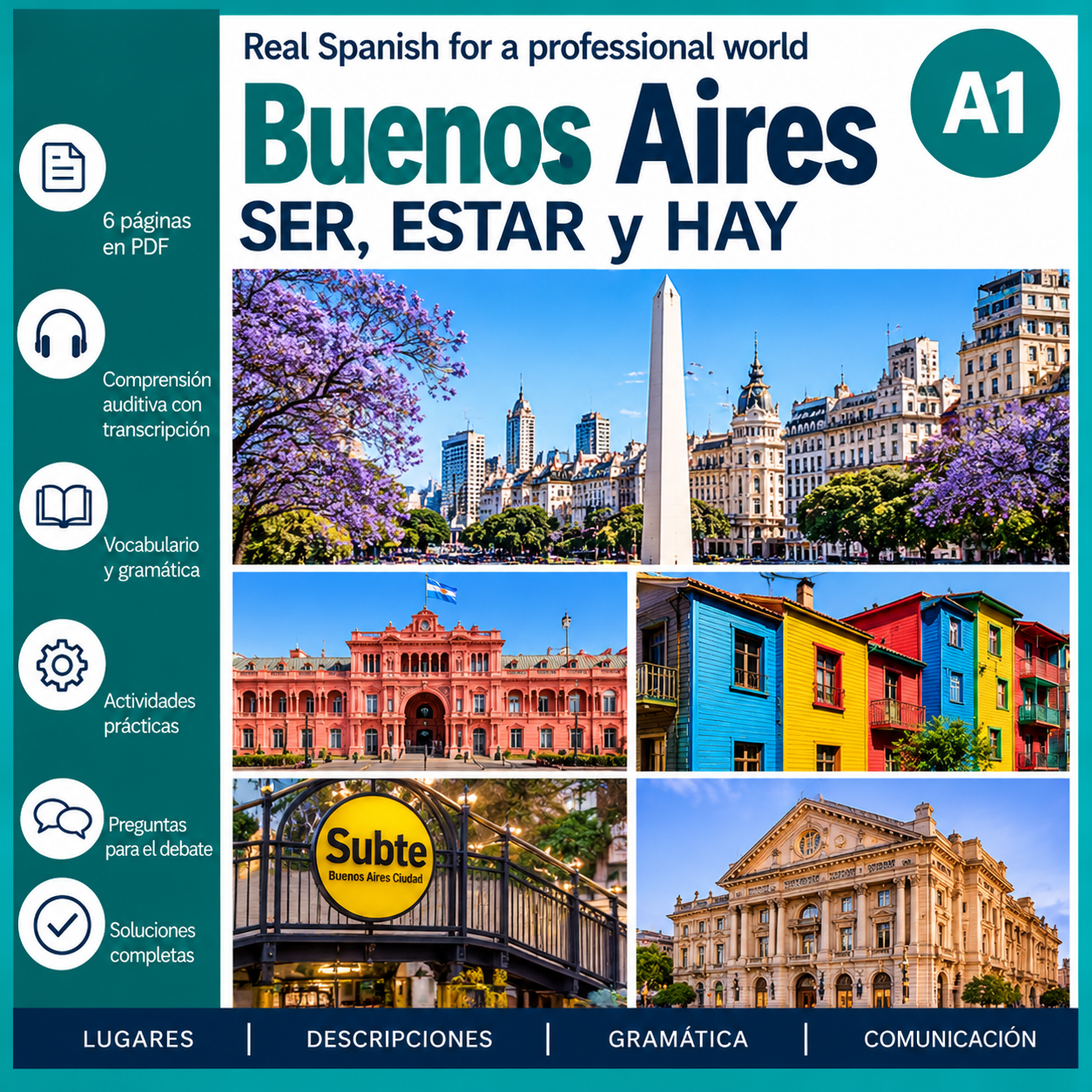
Discover Buenos Aires while developing essential beginner Spanish through this illustrated six-page A1 Spanish lesson, combining vocabulary, grammar, reading, listening, speaking and writing.
Using the Argentine capital as its setting, the resource introduces practical language for identifying places, describing cities and buildings, talking about locations and giving simple information about everyday surroundings.
The activities also include professional settings such as offices and courthouses, making the lesson particularly useful for beginners interested in practical and professional Spanish.
What the lesson includes
1. Vocabulary: Places in the city
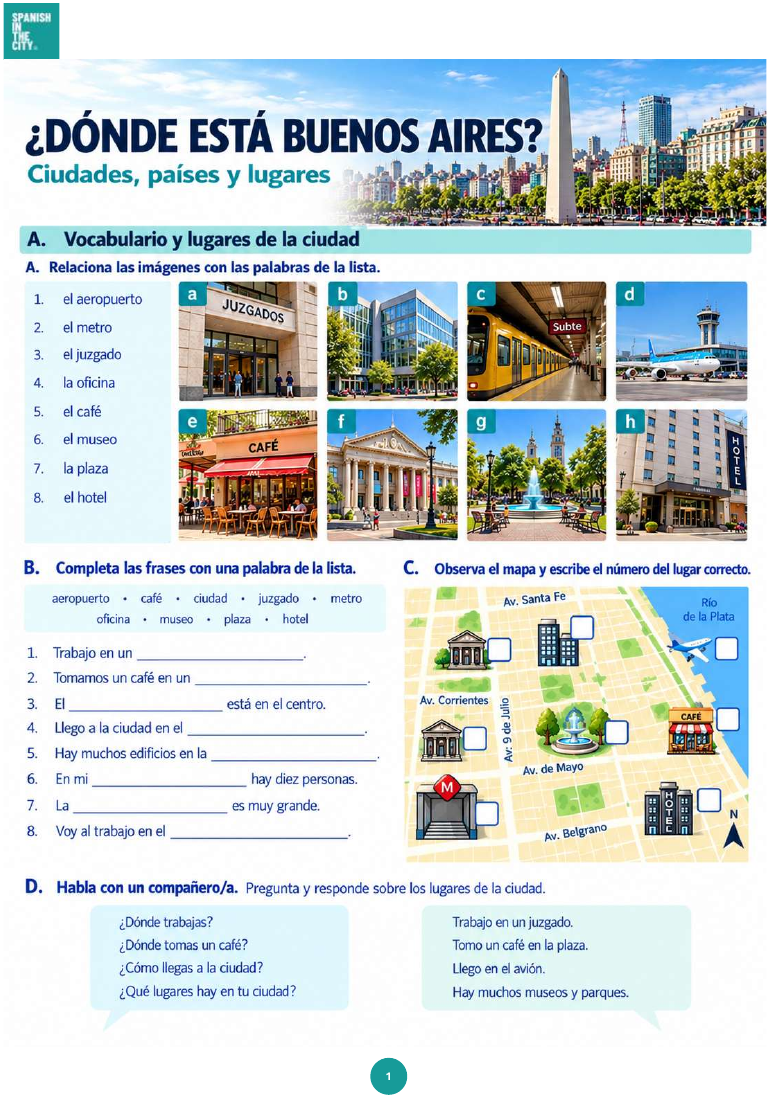
Students learn essential vocabulary including aeropuerto, metro, juzgado, oficina, café, museo, plaza and hotel.
Activities include matching words with photographs, completing sentences, identifying locations on an illustrated city map and practising simple questions and answers.
2. Grammar: SER, ESTAR and HAY
A structured introduction to three essential Spanish structures:
-
SER to identify and describe cities and buildings.
-
ESTAR to express location.
-
HAY to describe the existence of places and facilities.
Students complete contextualised exercises, identify correct forms and write sentences about familiar Buenos Aires landmarks.
3. Describing cities and places
An illustrated reading text introduces Buenos Aires through its architecture, neighbourhoods, cultural attractions and public spaces.
Students practise adjectives such as moderno, histórico, dinámico, amplio, cultural, agradable and cosmopolita, together with muy, mucho, muchos and muchas.
Activities include describing photographs, completing sentences, writing a short description of a city and participating in guided discussion.
4. Vocabulary in context: Important buildings and public places
Students explore vocabulary associated with the Casa Rosada, Cabildo, Catedral Metropolitana, offices, courthouses, banks, airports and railway stations.
Short reading passages about two historical buildings provide further comprehension practice.
5. Listening comprehension: Visiting Buenos Aires
A dialogue between two speakers introduces well-known places such as the Obelisco, San Telmo, La Boca, Palermo and the Teatro Colón.
The listening section includes multiple-choice questions, gap-fill activities, matching photographs with descriptions, true or false or not mentioned statements and personal response questions.
6. Speaking and writing practice
Guided activities encourage learners to describe their own city, discuss interesting places, compare neighbourhoods and talk about places they would like to visit.
7. Complete answers and listening transcript
The final page includes the answer key and the full dialogue transcript.
| Resource details | |
|---|---|
| Level | A1 |
| Format | Downloadable PDF |
| Length | 6 pages |
| Topic | Buenos Aires, places, buildings and city descriptions |
| Grammar | SER, ESTAR, HAY; adjectives; MUY and MUCHO |
| Skills | Vocabulary, reading, listening, speaking and writing |
| Includes | Photographs, illustrated map, exercises, answers and transcript |
Internet access: The PDF includes a clickable link to the accompanying listening audio. Internet access is required to play the recording. The full transcript is included in the resource.