

This blog focuses on the language of contracts, litigation, regulatory matters, cross-border transactions and formal communication. Articles analyse vocabulary, usage, register and recurring drafting issues faced by lawyers, bankers, diplomats and senior professionals working with Spanish in high-stakes environments.
This is not general Spanish. It is Spanish for Lawyers and bankers who require precision, nuance and control — the level of language needed in negotiations, boardrooms, legal documents and institutional settings.
This blog is expressly curated to foster a comprehensive understanding of the Spanish language. While every effort is made to ensure the accuracy of the information presented herein, it should be noted that this blog does not purport to offer legal, financial, or any professional counsel. Moreover, it is not designed to facilitate instruction in translation, nor does it provide lectures or courses pertaining to law, finance, or any commercial disciplines. The principal objective remains to assist readers in navigating and comprehending the subtleties of the Spanish language. No reliance should be placed on any content published on this blog for the purposes of legal, financial, business, or other real-world decision-making.
- La palabra del día: Procedencia
 According to the Real Academia Española (RAE), procedencia means, among other things, «conformidad con la moral, la razón o el derecho», a definition particularly relevant to legal language. The noun derives from the verb proceder, from the Latin procedĕre, formed by pro- (forward) and cedĕre (to go or move). Although procedencia commonly refers to the origin or source of something, …
- La expresión del día: Acusar recibo
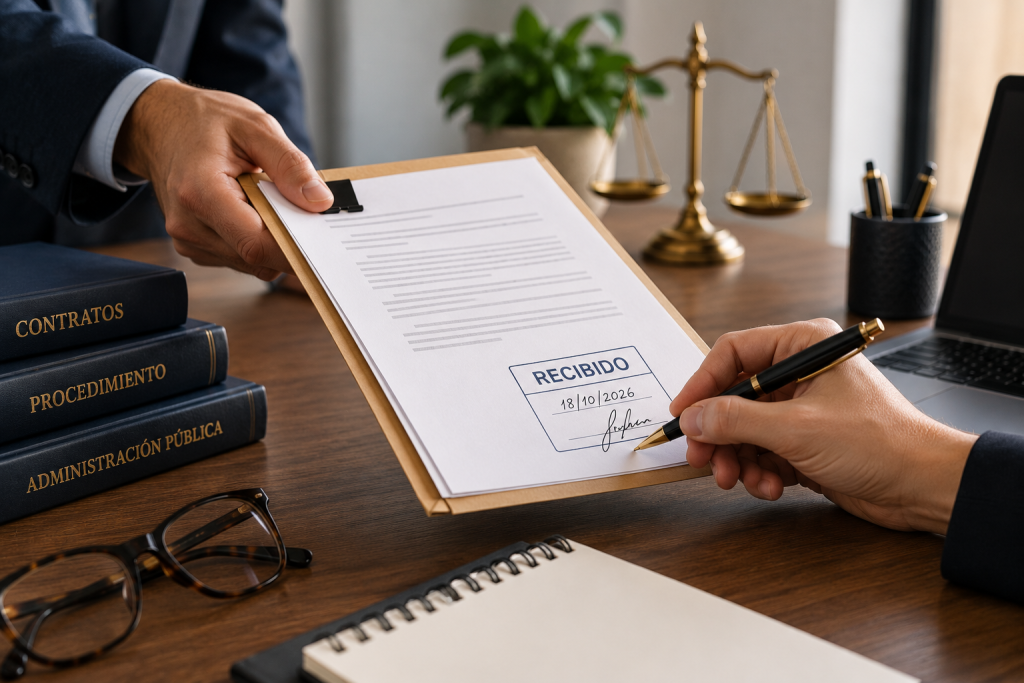 According to the Real Academia Española (RAE), acusar recibo means «comunicar a alguien que se ha recibido algo que envió o entregó», that is, to acknowledge receipt of something sent or delivered. The expression is particularly interesting because the verb acusar comes from the Latin accusāre, meaning “to accuse” or “to bring a charge against someone”, while recibo derives from …
- La Palabra del día: Obligar
 Verb derived from the Latin obligāre, formed from ob- and ligāre, “to bind”; literally, the original idea is to bind someone to something. From the same root we have obligación (obligation), obligatorio (mandatory/compulsory) and obligado (obliged/bound). In Legal Spanish, obligar means to require or compel someone to do something, although in contractual contexts it can also mean “to bind”. The …
- La palabra del día: Recabar
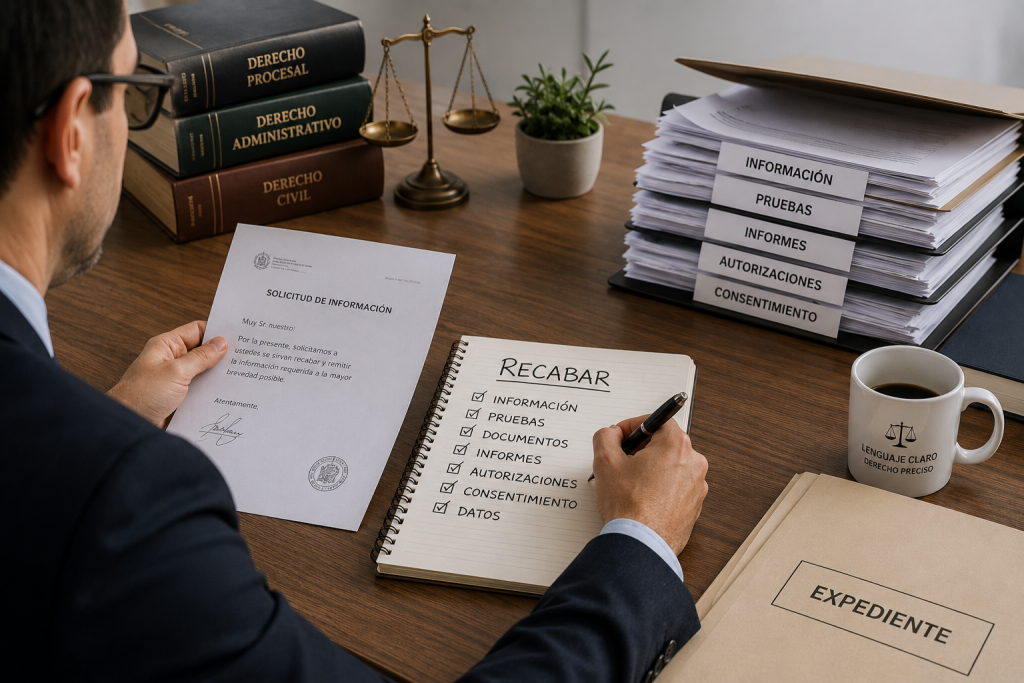 According to the RAE, recabar means alcanzar o conseguir con instancias o súplicas lo que se desea (“to obtain or secure something through a request or petition”). The term comes from Old Spanish recabar, probably derived from recabar in the sense of “to recover” or “to obtain again”, ultimately from the Latin recaptāre, the frequentative of recipere (“to recover, take …
- La palabra del día: Incurrir
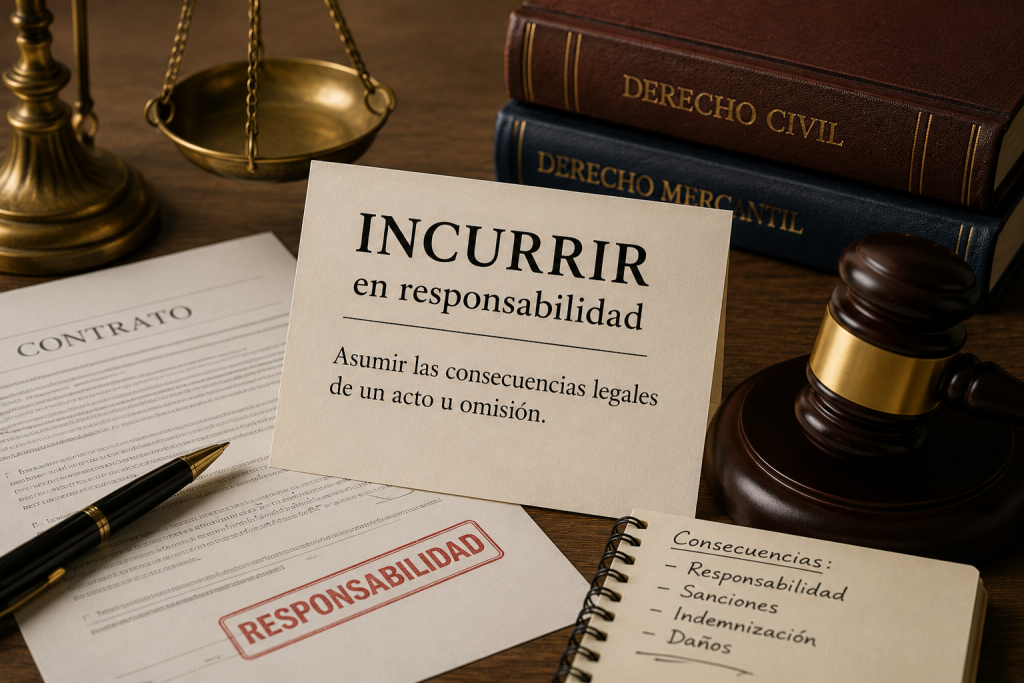 According to the RAE, incurrir means “to fall into a fault, an offense, or an error” (caer en una falta, cometerla). From the Latin incurrĕre, literally “to run into” or “to run against” (in- + currere, to run). In Legal Spanish, incurrir is almost always followed by the preposition en and means to become subject to a legal consequence, liability, …
- SUMARIO
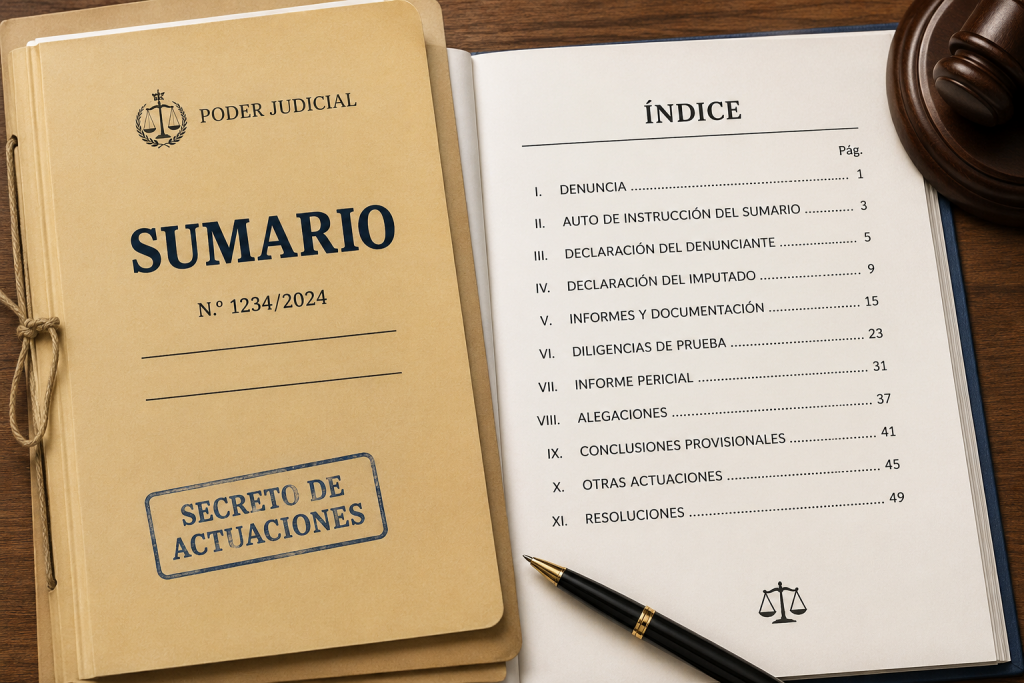 Masculine noun. From the Latin summarium, summary. In ordinary Spanish, sumario may refer to a summary or table of contents. In Legal Spanish, however, it usually refers to the preliminary stage of an investigation or to the file containing the proceedings carried out during that stage. E.g.: El sumario se encuentra bajo secreto de actuaciones → The investigation file is …
- La palabra del día: Percibir
 Verb, from the Latin percipĕre, to take completely or to gather. In Legal Spanish, percibir does not simply mean “to receive,” but to receive money, typically on a regular basis, such as salaries, pensions, or benefits. Percibe una pensión mensual → he/she receives a monthly pension; Los trabajadores perciben su salario a fin de mes → workers receive their salary …
- La palabra del día: Inmisión
 Noun. From the Latin immissio, -ōnis, derived from the verb immittere (to introduce, to bring in, to project inwards). It is formed from the prefix in- (within) and the verb mittere (to send, to throw). Inmisión refers to the introduction or projection of elements (noise, smoke, odours, vibrations, heat, light, etc.) from one property or activity that affect another, usually …
- La palabra del día: causante
 Noun.From the Latin causans, causantis, the active participle of the verb causari (to cause, to give rise to), itself derived from causa (reason, motive). It is formed from the root caus- and the suffix -nte, which denotes an agent, that is, the one who performs the action. Causante refers to the person who causes, originates, or gives rise to a …
- La palabra del día: Testar
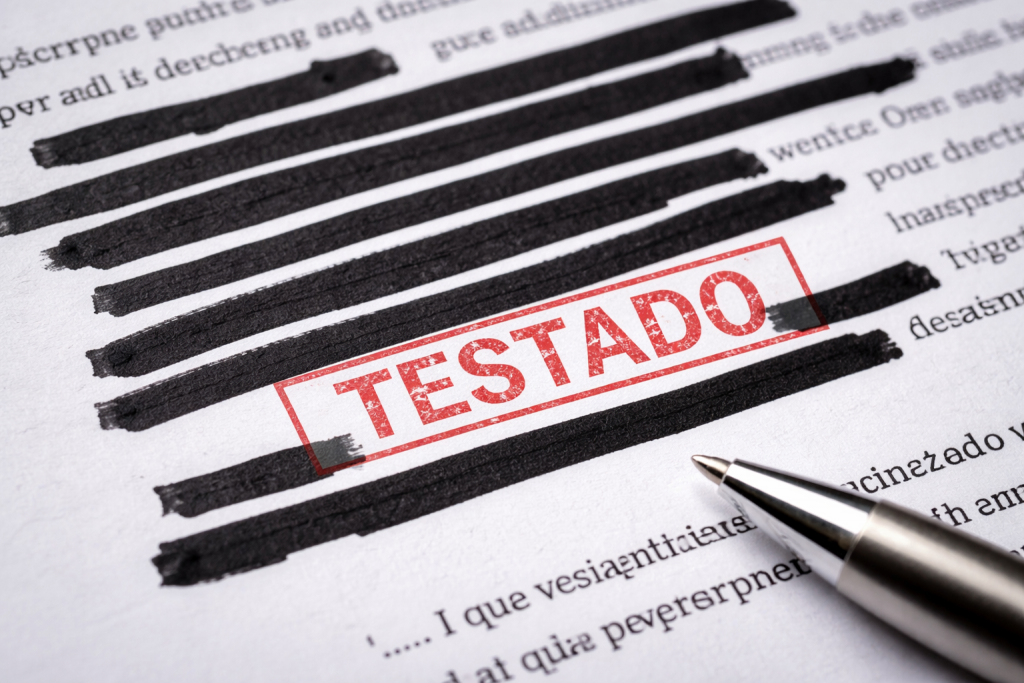 Verb. From Latin testāri: to bear witness, to testify. Testar is an interesting verb in legal Spanish, as it is used mainly in legal contexts and has little presence in everyday language. 1. To make a willThis is the traditional and primary meaning: to dispose of one’s assests upon death. See testamento. 2. To strike out or delete part of …
- La palabra del día: Saneamiento
 Masculine noun. Fom the verb sanear, itself derived from the Latin sanare — “to heal, make sound, or restore to health.”In everyday Spanish, sanear still keeps that sense of “cleaning up,” “restoring,” or “making something right.” In legal Spanish, this original meaning survives metaphorically: to “make good” a defect, flaw, or loss suffered by another person. Hence, saneamiento in law …
- La palabra del día: Suplir
 Suplir is a verb often used in legal Spanish. It comes from the Latin supplēre, “to fill up, to make complete.” In law, it refers to providing, covering, or replacing something that is missing. Typical uses include: The central idea is that suplir allows the law, a judge, or even a party to fill in what is missing, so that …
- Ejercicio: Terminación AnticipadaCláusula X – Terminación Anticipada por IncumplimientoEn caso de incumplimiento material de cualquiera de las obligaciones esenciales del Contrato, no subsanado dentro de un plazo de treinta (30) días desde la notificación escrita de la Parte Cumplidora, la Parte Afectada podrá declarar la terminación anticipada del Contrato, sin perjuicio de su derecho a reclamar daños y perjuicios. Cláusula Y – …
- La palabra del día: Acarrear
 Verb. From the Latin ad carrum , “toward the cart.” As part of our business Spanish courses online, we explore key terms that professionals can use in real contexts. Today’s word, acarrear, is essential for lawyers, bankers, and diplomats aiming to communicate with precision. In general Spanish, acarrear literally means to carry, to haul, or to transport, especially something heavy. …
- La palabra del día: Recurrir
 As part of our business Spanish courses online and legal Spanish vocabulary series, today’s word is recurrir — an essential term for legal appeals and challenges in court. From the Latin recorrere (“to run again”), the Spanish verb recurrir in legal contexts functions as a synonym of presentar or interponer un recurso. And what is a recurso? It is a …
- La palabra del día: Disponer de
 🧠 Meaning The phrase “disponer de” is a versatile and high-frequency structure in legal, business, and administrative Spanish. It translates most often as: to have at one’s disposal / to have access to / to possess It expresses availability, control, or legal authority over something—be it resources, property, rights, or time. 🏛 In Legal and Administrative Spanish In formal settings, …
- La palabra del día: Girar
 Among those verbs that might seem ordinary but carry significant legal weight, girar deserves special attention.Outside of legal or financial contexts, it usually means to “turn” or “spin.” But within legal Spanish, girar takes on a far more technical and specialized meaning. In legal and financial contexts Girar is frequently used when dealing with credit instruments and commercial documents. A …
- La palabra del día: Menoscabar
 EtymologyThe verb “menoscabar” derives from the combination of “menos” (meaning “less” or “smaller”) and “cabo” (an archaic term meaning “to finish” or “to complete”). You might recognize this root in expressions like “al fin y al cabo” (at the end of the day) or “al cabo de 10 días” (after 10 days) or in Ciudad del Cabo (Cape Town). Together, …
- La palabras del día: Querella & Denunica
 The Spanish feminine noun denuncia can also be translated into English as complaint, report, claim, but, in Legal Spanish, querella and denuncia are two very different concepts
- La palabra del día: Derecho de Servidumbre
 Servidumbre is a legal concept in Spanish law that refers to an easement or a burden placed on one property (predio siriviente) for the benefit of another property (predio dominante). This means that the owner of the predio sirviente must allow the owner of the predio dominante to perform certain actions on their land, such as accessing a road, installing …
Continue reading “La palabra del día: Derecho de Servidumbre”
- La palabra del día: Título
 In legal Spanish, “título” refers to a document or instrument that establishes ownership, rights, or legal status. It can pertain to property (e.g., land titles) or qualifications (e.g., academic degrees). The word also extends into other forms, such as: Titular: This refers to the holder of the title or rights. For example, a “titular” of a property is the recognized …
- Fraude contra hoteles

- Las expresiones del día: “Ofrecer Prueba” y “Producir Prueba”
 In legal proceedings, the terms “ofrecer prueba” and “producir prueba” are crucial in the process of presenting and validating evidence.Ofrecer Prueba: This term refers to the stage in a legal case where a party formally proposes to present certain pieces of evidence to support their claims. It involves identifying and listing the evidence that one intends to use, which could …
Continue reading “Las expresiones del día: “Ofrecer Prueba” y “Producir Prueba””
- La expresión del día: Derecho de Amparo
 If you explore the vast landscape of the Spanish language, amparo might be defined as ‘protection‘ or ‘shelter‘. However, in the realm of Legal Spanish, it navigates deeper waters. A masculine noun (el/un amparo), its origins can be traced back to the Latin “amparare”, which denotes ‘to protect’. In the English legal context, the closest equivalent might be “writ of …
- La palabra del día: Agravio
 When delving into the vast domain of Legal Spanish, the word agravio stands out as an intriguing term. Directly translated to English, agravio means ‘grievance,’ ‘affront,’ or ‘insult.’ But within the legal lexicon of Spanish-speaking countries, its meaning expands considerably.This word has its origins in the Latin term gravāre, which means ‘to weigh down’ or ‘to burden’. It captures the …
- La economía española
 Practique el vocabulario, escuche el audio sobre la economía española y haga la tarea que le sigue sobre el texto que escuche:
- La expresión del día: Derechos Reales
 In Legal Spanish, “Derechos Reales” is a term used in the legal system to refer to a set of rights that are granted to individuals or entities over a particular asset or property. These rights are called “real” because they are directly related to rights over things (res in Latin.The concept of “Derechos Reales” is similar to the concept of …
- La palabra del día: Solvente
 Adjective. Able to respond to an economic debt or take charge of an obligation. E.g.: Escrivá defiende que la Seguridad Social es “solvente” y reconoce la falta de personal: Escrivá stresses that the public pension system is “solid and solvent”.The noun is la solvencia. E.g.: Motivos que dificultan la concesión de una hipoteca ajenos a la solvencia: Reasons that make …
- La palabra del día: Coacción
 Feminine noun. This term has two interrelated meanings: 1. Force or violence done to someone to force him/her to say or do something; 2. Legitimate power of the Law to enforce compliance or prevail over its infringement. E.g.1: La acusación debe demostrar sus argumentos sin recurrir a pruebas obtenidas por coacción o por fuerza: The prosecution must prove its case …
- La palabra del día: Entrada en vigorFeminine noun. Beginning of the effectiveness of a legal norm.The verb is entrar en vigor. E.g.: Como regla general, si en ella no se dispone otra cosa, entra en vigor a los veinte días de su publicación en el Boletín Oficial del Estado (CC, art. 2.1): As a general rule, if it does not provide otherwise, it enters into force …
- La palabra del día: Facultad
 Femenine noun. You may have heard this term several times and you may have translated it as ‘university college’. E.g.: Faculatad de Derecho: College of Law.In Legal Spanish, facultad has two more meanings: 1. power or right to do something. E.g.: El derecho subjetivo es la facultad propia de un sujeto para realizar o no una cierta conducta: The subjective …
- La palabra del día: Perito/a
 Adjective, mainly used as a noun. Expert or knowledgeable in something. As a noun, in Legal Spanish we use this term to refer to the expert who gives evidence in a hearing (audiencia pericial) or by means of a document (informe pericial). E.g.: Homicidio de Tino John: Un perito afirma que no hubo enfrentamiento: Homicide of Tino John: An expert …
- La palabra del día: Adjudicar
 Verb. To assign or attribute something to a person or thing. E.g.: Registraduría adjudicó por $1,23 billones la licitación para organización de elecciones: The Registrar’s Office awarded the tender for the organization of elections for $ 1.23 billion.The noun is la adjudicación: Transporte urbano: Austin quiere conocer el criterio de adjudicación a la empresa Ceferino: City transport: Austin wants to …
- La palabra del día: Contribuyente
 Masculine and feminine noun. A contribuyente is a person required by law to pay a tax. Asamblea Nacional exhorta al Gobierno por facilidades de pago de impuestos a los contribuyentes de El Oro → The National Assembly urges the Government to grant tax payment facilities to the taxpayers of El Oro. The verb is contribuir: to contribute. Another noun with …
- La palabra del día: Auditoría
 Feminine noun. From the Latin verb audire, which means ‘ to hear’, which in turn has its origin in the first auditors who exercised their function judging the truth or falsehood of what was submitted to their verification, mainly by observing. Generally, it is the action of verifying that a certain event or circumstance occurs according to plan, but if …
- La palabra del día: Historial de crédito
 Masculine noun. Also called historial crediticio and reporte de crédito. Report that details the most relevant information about the financial profile of a natural or legal person. Therefore, it provides information of interest on aspects related to the solvency of the person who is going to request a loan or to enter into a contract. E.g.: Cómo conseguir una hipoteca …
- La palabra del día: Adjudicatario/a
 Masculine and feminine noun. In Legal Spanish, this term is used in Civil and Administrative Law and it refers to the person who offers the last and highest bid in a public auction sale of a piece of furniture or a property and to any person recipient of an award. E.g.: El Pliego de Prescripciones Técnicas del contrato recoge que …
- La palabra del día: Denegar
 Verb. Not granting what is asked or requested. E.g.: Gobierno denegó permiso de trabajo a periodista estadounidense de medio digital El Faro: Government denied work permit to US journalist from online newspaper El Faro.The noun is la denegación. As you can see, denegar derives from negar: to deny, reject. In this case the noun is la negación. Both adjectives are …
- La palabra del día: Subsanar
 Verb. This term has the same root of sanar, sano: to heal, healthy. It is almost exclusively used in a legal context and it has two different meanings somehow related: 1. To repair or remedy a defect. E.g.: El problema de los uniformes para criollos van a Tokio se subsanó: The problem of uniforms for Dominican athlets going to Tokyo …
- La palabra del día: Emparejar
 Verb. This term has several meaning an all of them somehow related. I am sure it must have the same root of par (pair) and if you check in the dictionary you will see it translated as ‘to match, to pair’. In Economics, emparejar means ‘to bring something on a level with something else’. E.g.: Ya hay 170 empresas comprometidas …
- La palabra del día: Traslado
 Masculine noun. In Legal Spanish, we call traslado the notification of judicial writings that one of the parties must make to the other. For example, the traslado of the claim is the communication that the defendant receives of what is imputed or claimed, in order to be able to make exceptions if there are any. E.g.: Una vez sea realizada …
- La palabra del día: Devengación
 Feminine noun. This term is used almost exclusively in a legal context and it refers to the acquisition of the right to some perception or remuneration for reasons of work, service, or other title. The verb is devengar. E.g.:CGR determinó que no procede devengar obligación de pagar bienes y servicios que no se han recibido conforme →The National Audit Office …
- La palabra del día: Reivindicar
 Verb. This term has three main meanings: 1. To claim something to which one thinks one is entitled. E.g.: Itaembé Guazú: con múltiples actividades reivindicaron los derechos de la niñez y la juventud: Itaembé Guazú: with multiple activities they called for the rights of children and youth. 2. To argue in favor of something or someone. E.g.: Alberto Fernández reivindicó …
- La palabra del día: OpaSingular feminine noun. Public offering aimed at the partners of a company listed on the stock market proposing the acquisition of their shares in specified terms and conditions. E.g.: El Gobierno aprueba con condiciones la opa de IFM sobre el 22,7% de Naturgy: The Government approves with conditions the IFM takeover bid for the 22.7% of Naturgy.As you can see, …
- La palabra del día: Pujar
 Verb. This term has lots of different meanings and all of them somehow related to making force or trying to overcome an obstacle. For example, pujar is what a a woman does when is delivering a baby. In this case the noun is el pujo. E.g.: Todo lo que necesitas saber sobre los pujos del parto: Everything you need to …
- La palabra del día: Gravamen
 Masculine noun. Tax that is applied on a property, a property or the wealth of a person. E.g.: Se introduce un gravamen del 5 % del valor catastral para aquellas sociedades que posean inmuebles en nuestro país: a tax of 5% of the cadastral value is introduced for those companies that own real estate in our country.The verb is gravar. …
- La palabra del día: Requisitos
 Masculine noun, usually in plural. Circumstance or condition necessary for something. E.g.: Plan para terminar con los requisitos legales para las mascarillas el 19 de junio: Plan to end legal requirements for masks on June 19.The verb is requerir: to request. Another verb with the same root is requisar (to confiscate) although their meanings are not related. The noun of …
- La palabra del día: Alta
 Feminine noun. This term has many meanings. Let’s see the ones that may be of interest to us.1. Authorization given by a doctor for the reinstatement of a patient to ordinary life, and also the documents that attest the discharge. We also call it el alta médica. The lexical locutions here are dar el alta (médica) de (el hospital/la clínica) …
- La palabra del día: Razón social
 Feminine noun. Name with which a commercial entity or business is legally registered.The razón social will also have a different suffix depending on the type of commercial company in question. For instance:Sociedad Anónima: it has the suffix S.A. in its company name. or SA.Sociedad de Responsabilidad Limitada: it has the suffix S.R.L. or SRL.Sociedad Colectiva: it uses the suffix S.C. …
- La palabra del día: Eximir
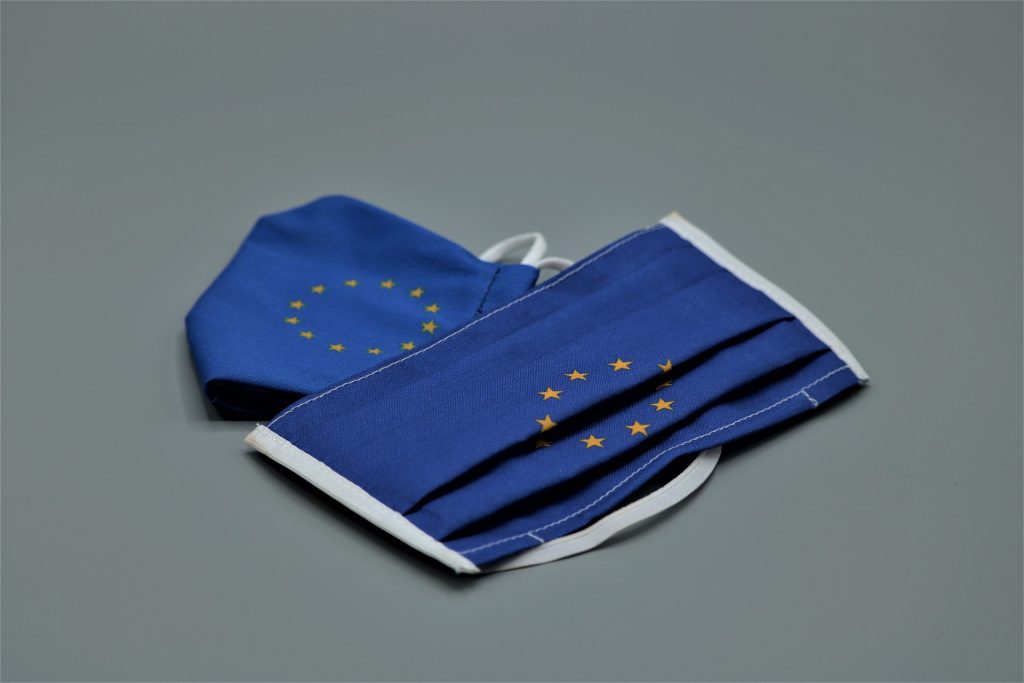 Verb. To free, get rid of burdens, obligations, cares, guilt. E.g.: UE aprueba eximir de IVA a los bienes que la Comisión distribuya en pandemia: EU approves exempting from VAT the goods that the Commission distributes in a pandemic.The noun is la exención or, if you are really a purist, la eximición. E.g.: Unos 1500 comercios podrán pedir la eximición …
- La palabra del día: Prelación
 Feminine noun. Priority or preference with which something should be attended to with respect to something else with which it is compared. If you asked me what the difference between prioridad and prelación is, my first thought would be that prelación is more common in legal contexts because the term prelación implies the idea of order. What I mean is …
- La palabra del día: Umbral
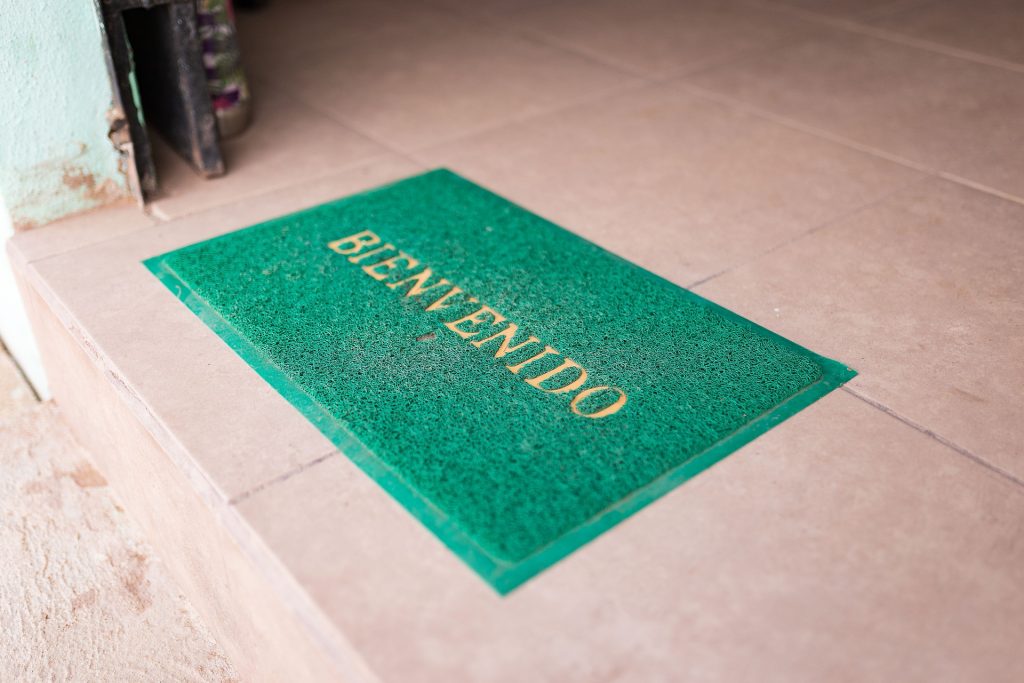 Masculine noun. Formerly lumbral, from the Latin limes, border, house border. This term has mainly two meanings: 1. in general Spanish it is the lower part or step in the door or entrance of a house or building. E.g.: Fitz se detuvo en el umbral: Fitz stopped in the doorway. 2. In Economics and Mathematics, umbral is the minimum value …
- La palabra del día: Ahorrar
 Verb. To save money, energy or any other fungible goods as a forecast for future needs. E.g.: Si el mundo ahorrase 20% de la energía que usa para iluminar los hogares, las oficinas y las calles, podríamos ahorrar…: If the world saved 20% of the energy it uses to light homes, offices and roads, we could save.The noun is el …
- La palabra del día: Vivienda
 Feminine noun. This term is used mainly in Economics and it refers to a closed and covered place built to be inhabited by people. As you can see, it has the same root of vivir. E.g.: La compra de vivienda se dispara un 124% y el precio cae un 3,6%: ¿dónde está más activo el mercado?: Home purchases soar 124% …
- La palabra del día: Convocar
 Verb. This term has two main meanings somehow related to each other. 1. To call formally one or more people to attend a specific place or event. E.g.: ¿Quiénes son los expertos que convocó la ANEP para repensar el futuro de la educación?: Who are the experts called by ANEP to rethink the future of education? 2. To announce, to …
- La palabra del día: Préstamo
 Masculine noun. To give something to someone to use for some time and then return it. E.g.: El granjero obtuvo un préstamo para comprar un tractor nuevo: The farmer took out a loan to buy a new tractor.The lexcial expression is tomar/pedir un préstamo if you are the borrower or deudor and dar un préstamo or prestar if you are …
- La palabra del día: Baja
 Feminine noun. Another term with several meanings. These ones are relevant to us:1. Decrease in the price, value, and estimate of something. E.g.: Esto se demuestra por la tendencia a la baja de los precios de venta de la industria comunitaria en el período considerado: This is demonstrated by the decreasing trend in the Community industry’s sales prices over the …
- La palabra del día: PIB (Producto Interno Bruto)
 Masculine noun. Also known as Producto Interior Bruto and Producto Bruto Interno (PBI), it is a macroeconomic quantity that expresses the monetary value of the production of goods and services of final demand of a country or region for a specified period, usually one year or quarterly. E.g.: La baja tasa fiscal real, estimada en 11% del PIB, limita las …
Continue reading “La palabra del día: PIB (Producto Interno Bruto)”
- El concepto del día: Gestión de fondos
 Femenine noun. Fund management. The person is called el/la gestor/a de fondos. The company is called la gestora de fondos. E.g.: Blackrock es una gestora de fondos de inversión.There are different types of gestión de fondos: 1. fondos monetarios: monetary funds; 2. fondos de renta fija: fixex income funds; 3.fondos mixtos: mixed funds; 4.fondos de renta variable: equity funds; 5. …
- La palabra del día: Directorio
 Masculine noun. Board of directors of certain associations, parties, etc. The chairman of the board is called el/la presidente del directorio, and the CEO is el/la director/a ejecutivo/a, who is usually also a member of el directorio. E.g.: La designación del director ejecutivo se efectuará por un periodo limitado y renovable: The appointment of the CEO is made for a …